With Dada Chen at NYAFF 2013

With Dada Chen at NYAFF 2013
Showing posts with label Globus Film Series. Show all posts

Sunday, April 08, 2018

Retrospective of renowned Japanese cinematographer Kazuo Miyagawa

Japan Society NY
presents
Kazuo Miyagawa: Japan's Greatest Cinematographer
When: April 13-28, 2018
Where: Japan Society NY
333 East 47th Street, NYC
Map

In celebration of the 110th anniversary of his birth, Japan Society will present an 11-film retrospective surveying the work of Kazuo Miyagawa (1908-1999), the most influential cinematographer of postwar Japanese cinema. Working intimately with directors like Yasujiro Ozu, Akira Kurosawa, Kenji Mizoguchi and Kon Ichikawa on some of their most important films, Miyagawa pushed Japanese cinema to its highest artistic peaks through his lyrical, innovative and technically flawless camerawork. This career-spanning selection displays his great versatility, including major masterpieces and rarely shown titles, screening in 35mm and new digital restorations.

For further information, a complete list of the films that will be shown at Japan Society and to buy tickets for screenings there, click here.

Note that co-organizer The Museum of Modern Art will host repeat screenings and additional Miyagawa retrospective titles from April 12-29. Preceding the retrospective, new 4K restorations of Mizoguchi's A Story From Chikamatsu and Sansho the Bailiff, both shot by Miyagawa, will run at Film Forum from April 6-12.

Friday, March 24, 2017

BEYOND GODZILLA series lecture by curator Mark Schilling

Japan Society
presents
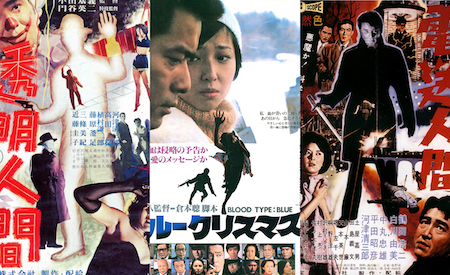
The H-Man © 1959 Sony Pictures; Blue Christmas © 1978 Toho Co. Ltd.; Invisible Man © 1954 Toho Co. Ltd.
Beyond Godzilla
Series Curator Lecture
When: Saturday, March 25th at 5:00 PM
Where: Japan Society NY
333 East 47th Street, NYC

Beyond Godzilla series curator Mark Schilling traces the evolution of the sci-fi/fantasy genre in Japan that (save for one big, scaly beast) remains largely neglected, considering its prewar origins to the present. The lecture will introduce Schilling’s selections and provide context for their inclusion in relation to the history of sci-fi/fantasy films in Japan, from Toho sci-fi epics helmed by Ishiro Honda and Eiji Tsuburaya to fantasies by pioneering indie auteur Nobuhiko Obayashi and beyond.

Approx. 60 min. This event is free with the purchase of a ticket to any film in the series. Seating is limited. Ticketholders will be accommodated on a first-come, first-served basis.

Part of Beyond Godzilla: Alternative Futures & Fantasies in Japanese Cinema.

Wednesday, February 15, 2017

BEYOND GODZILLA, seven film series + one lecture, coming to Japan Society NY starting March 24th

Japan Society NY
presents
The H-Man © 1959 Sony Pictures; Blue Christmas © 1978 Toho Co. Ltd.; Invisible Man © 1954 Toho Co. Ltd.
Globus Film Series
Beyond Godzilla: Alternative Futures & Fantasies in Japanese Cinema
When: March 24—April 8, 2017
Where: Japan Society NY
333 East 47th Street, NYC

While Godzilla undoubtedly ranks among Japanese cinema's most well-known and beloved exports, the series of films in which he stars is only one of the many remarkable entries within the rich and varied universe of Japanese tokusatsu ("special effects") films. This seven-film series, a modified version of the program organized for the 2016 Far East Film Festival in Udine, Italy by film critic and writer Mark Schilling, goes beyond Toho's superstar monster to introduce a selection of titles that display the wide-ranging imagination of the Japanese sci-fi/fantasy genre, including innovative B-movies, kaiju eiga ("monster movies") and non-Godzilla classics involving director Ishiro Honda and effects maestro Eiji Tsuburaya.

The films to be shown are: The H-Man, Latitude Zero, School in the Cross Hairs, Invisible Man, The Secret of the Telegian, Blue Christmas, and Gamera 3: Revenge of Iris. Beyond Godzilla, a lecture by series curator Mark Schilling, will take place on Saturday, March 25th at 5:00 PM.

Further information, including the full schedule, is available here.

Tickets:
$13/$10 seniors & students/$9 Japan Society members

EXCEPT screening of The H-Man + Opening Night Party: $16/$13 seniors & students/$12 Japan Society members

Special Offer: Buy tickets to at least 3 different films in the same transaction and receive $2 off each ticket.

Saturday, April 23, 2016

MEMORIES OF MATSUKO will close JAPAN SINGS! film series this evening

Japan Society NY
Presents
Memories of Matsuko © 2006 "Memories of Matsuko" Production Committee.
Memories of Matsuko / Kiraware Matsuko no Issho
Directed by Tetsuya Nakashima
With Miki Nakatani, Eita, Yusuke Iseya,
Teruyuki Kagawa, and Mikako Ichikawa
Japan, 2006, 130 minutes, 35mm, b&w
In Japanese with English subtitles

When: Saturday, April 23rd, 2016 at 7:00 pm
Where: Japan Society
333 East 47th Street, NYC

The 2016 Globus Film Series Japan Sings! The Japanese Musical Film will conclude with this evening's 7:00 pm screening of the wonderful musical comedy Memories of Matsuko.

Synopsis (courtesy Japan Society):
Another darkly hilarious film about family—the desire for recognition and the pain of its refusal. Cute digital effects and gaudy musical numbers belie a story of abuse that has much in common with Kenji Mizoguchi's Life of Oharu. Matsuko (Miki Nakatani of the Ring franchise) is found beaten to death in poor suburb of Tokyo. Alienated from her family, her life is dismissed as meaningless until her loser nephew, tasked with cleaning up her apartment, starts to piece it together. The musical interludes transform everyday exploitation into an ironic utopia that only accentuates the overwhelming emotional suffering of the rest of the film.

THE HAPPINESS OF THE KATAKURIS reviewed; at Japan Society NY this afternoon

Japan Society NY
Presents
The Happiness of the Katakuris © 2001 THE HAPPINESS OF THE KATAKURIS PRODUCTION COMMITTEE.
  The Happiness of the Katakuris / Katakuri-ke no Kofuku
Directed by Takashi Miike
With Kenji Sawada, Keiko Matsuzaka, Shinji Takeda,
Naomi Nishida, and Kiyoshiro Imawano
Japan, 2001, 113 minutes, 35mm, color
In Japanese with English subtitles

When: Saturday, April 23rd, 2016 at 4:00 pm
Where: Japan Society
333 East 47th Street, NYC

Synopsis (courtesy Japan Society):
Based on a non-musical Korean film—The Quiet Family by another genre-mixing filmmaker, Jae Woon Kim—Takashi Miike uses the increasing absurdity of this comedy-horror-musical to explore the state of the Japanese family after the collapse of the economic boom that underpinned the popular song film. The film's claymation opening sequence and bleak narrative of a downsized salaryman opening a B&B in the country presents contemporary life as a hopeless cycle of exploitation, but the performance of the film's lo-fi musical numbers by a cast that includes Kenji Sawada, star of several "group sounds" musical films in the 1960s, highlights a nostalgia for intimacy and optimism. Rated R.

AsianCineFest Comments:
The incredibly prolific director Takashi Miike has been one of my favorite Japanese directors since I first saw Ichii the Killer (which came out in 2001, the same year as Happiness) years ago at the Film Society of Lincoln Center. Since then I've seen Ichi several times on disc, and have watched numerous other Miike films (13 Assassins, Yatterman, Sukiyaki Western Django, Zebraman, Audition, etc.) either onscreen or on home video. All those that I've seen have been entertaining and worth watching, some exceedingly so. The Happiness of the Katakuris is one of the top Miike films I've watched.

It's the tale of of what the Katakuri family (I see no need for the "s" that makes the family name plural in the English title) experiences one summer. The story is narrated by Yurie, a young girl. She lives with her divorced mother Shizue, her uncle Masayuki, Grandpa Masao, Grandma Terue, and Great-Grandpa Jinpei at the White Lover's Guest House. After being laid off, Masao had bought the land and built the guest house because he had heard that a road would be built nearby and would bring many tourists.

Unfortunately, the guests are slow to materialize, and when they do, they have a habit of inconveniently dying on the premises. The family decides these deaths must be kept secret, lest they ruin any chance the guest house has of ever succeeding.

Hilarity ensues. And musical numbers, including one that brazenly recalls Julie Andres singing in a mountain meadow in The Sound of Music. (See the image at the top of this post.)

The Happiness of the Katakuris is further proof that Miike can probably make any kind of film and make it well.

AsianiCineFest Rating:
3.5 out of 4 stars; this fun romp is highly recommended

This afternoon's screening of The Happiness of the Katakuris is part of the 2016 Globus Film Series Japan Sings! The Japanese Musical Film.

Wednesday, April 20, 2016

JAPAN SINGS! film series concludes this Saturday, April 23rd

Japan Society NY's wonderful film series Japan Sings! The Japanese Musical Film concludes this Saturday, April 23rd with two separate screenings.

Takashi Miike's The Happiness of the Katakuris will be shown at 4:00 pm and Memories of Matsuko will screen at 7:00 pm.

The Happiness of the Katakuris / Katakuri-ke no Kofuku
Directed by Takashi Miike
Jap;an 2001, 113 minutes, 35 mm, color
In Japanese with English subtitles
Info and Tickets

Memories of Matsuko / Kiraware Matsuko no Issho
Directed by Tetsuya Nakashima
Japan, 2006, 130 min., 35mm, color
In Japanese with English subtitles
Info and tickets

Tuesday, April 19, 2016

A TREATISE ON JAPANESE BAWDY SONGS at Japan Society tonight

Japan Society NY
Presents
A Treatise on Japanese Bawdy Songs (aka Sing a Song of Sex) © 1967 Shochiku Co., Ltd.
 A Treatise on Japanese Bawdy Songs / Nippon Nihon Shunkako
Directed by Nagisa Oshima
With Ichiro Araki, Akiko Koyama, Kazuyoshi Kushida,
Hiroshi Sato, and Kazuko Tajima.
Japan, 1967, 103 minutes, 35mm, color
In Japanese with English subtitles

When: Tuesday, April 19th, 2016 at 7:00 pm
Where: Japan Society
333 East 47th Street, NYC

Synopsis (courtesy Japan Society):
Nagisa Oshima uses pop singer Ichiro Araki to depict the "obscenity" of underclass desire. Four male and three female students from a provincial city accompany their teacher to Tokyo to take university entrance exams. The teacher dies and one of the boys may be the culprit. But the film is less a narrative than a collage of scenes about power imbalance: between city and country, young and old, rich and poor, Japan and Korea. Taking a hint from Twilight Saloon, Oshima uses song to mark out different social positions, from wartime naval trainees and university radicals to ethnic minorities and resentful adolescents. The question is who gets to sing, and what.

AsianCineFest Comments:
A Treatise on Japanese Bawdy Songs is not so much a musical as a drama that uses songs at times -- one bawdy song in particular is sung repeatedly, like a theme. The film is available on DVD as part of The Criterion Collection's Eclipse Series 21: Oshima's Outlaw's Sixties. There it goes by the alternate title of Sing a Song of Sex. In his comments for the slipcase sheet, contributing writer Michael Koresky states that the film was largely improvised, that Oshima told his cast two weeks before filming commenced that there would be no script. This is evident in the rather rambling, unstructured nature of the film.

There's nothing special to say about the acting; all the leading characters, except for the students' teacher, are played by apparently relatively inexperienced youths. Also the soundtrack is often out of sync. This is noticeable in some of the dialogue, singing and hand clapping.

Still, despite it's flaws, the film is an interesting time capsule and certainly worth seeing.

AsianCineFest Rating:
2.5 out of 4 stars; better than fair but not so much so as to be regarded as a really good film. Recommended viewing; just don't expect a compelling cinematic experience.

Part of the 2016 Globus Film Series Japan Sings! The Japanese Musical Film.

Saturday, April 16, 2016

IRRESPONSIBLE ERA OF JAPAN reviewed; will be screened at Japan Society this evening

Japan Society NY
Presents
Hitoshi and the three women in his life: the geisha, the bar hostess, and the executive secretary (Irresponsible Era of Japan © 1962 Toho Co., Ltd)
Irresponsible Era of Japan / Nippon Musekinin Jidai
Directed by Kengo Furusawa
With Hitoshi Ueki, Noriko Shigeyama, Hajime Hana,
Asami Kuji, and Toru Yuri
Japan, 1962, 86 minutes, 35mm, b&w
In Japanese with English subtitles

When: Saturday, April 16th, 2016 at 7:00 pm
Where: Japan Society
333 East 47th Street, NYC

Synopsis (courtesy Japan Society):
The Crazy Cats comic jazz band and their featured singer Hitoshi Ueki did not invent the local genre of the "salaryman" comedy but they were its ubiquitous face in the 1960s. Some of the first big stars of the new medium of television, they brought standing-room-only audiences to a cinema in decline. This film established Ueki's comic persona as a salaryman who would goof off at work and yet somehow always come out ahead, every so often bursting into one of his well-known Japanese folk-inflected songs while dancing something like the twist. The first in a series of "Irresponsible" films whose comic songs formed the soundtrack of Japan's high economic growth.

AsianCineFest Review:
Hitoshi Taira (Hitoshi Ueki) is quite possibly the most irresponsible man in the world. He may like to thing of himself as an "average" guy, but he's a smooth operator if ever there was one. This master of scamming takes advantage of high-level corporate machinations to promote himself and his own agenda, although he never does any real harm to anyone. Along the way he manages to help a geisha finance a new car and a bar hostess to open her own establishment, and to romance an executive secretary.

The film has a number of songs sung by Hitoshi and a couple of dance routines. The 50+ year old comedy travels well over the years and across cultures. All-in-all, Irresponsible Era of Japan is solidly entertaining and well-worth seeing.

AsianCineFest Rating:
3 out of 4 stars; recommended

Print courtesy of National Film Center, The National Museum of Modern Art, Tokyo.

This screening of Irresponsible Era of Japan is part of the 2016 Globus Film Series Japan Sings! The Japanese Musical Film.

Friday, April 15, 2016

TWILIGHT SALOON screening at Japan Society this evening

Japan Society NY
Presents
Twilight Saloon © 1955 Toho Co., Ltd.
Twilight Saloon / Tasogare Sakaba
Directed by Directed by Tomu Uchida
With Isamu Kosugi, Keiko Tsushima, Daisuke Kato,
and Tetsuro Tamba, Jun Tatara
Japan, 1955, 93 minutes, 35mm, b&w
In Japanese with English subtitles

When: Friday, April 15th, 2016 at 7:00 pm
Where: Japan Society
333 East 47th Street, NYC

Twilight Saloon is Tomu Uchida's second comeback film, after staying in China since World War II. Isamu Kosugi plays an alcoholic painter who quit painting when he realized his wartime work was propaganda. He bears witness to intersecting narratives that all take place on a single set, a cheap saloon featuring records and live performance. Gliding long takes and long shots, layered in depth, create a visual cross-section of postwar Japanese society in which classical opera, military marches, folk, and pop songs articulate the political, social, and sexual tensions between groups as well as reveal the interiority of each character. An all-star allegory of postwar Japan as seen by a war returnee.

Print courtesy of National Film Center, The National Museum of Modern Art, Tokyo.

This screening of Twilight Saloon is part of the 2016 Globus Film Series Japan Sings! The Japanese Musical Film. 

Monday, April 11, 2016

SINGING LOVEBIRDS at Japan Society tomorrow night

Japan Society NY
Presents
Singing Lovebirds © 1939 Nikkatsu Corporation.
Singing Lovebirds / Oshidori Utagassen
Directed by Masahiro Makino
With Chiezo Kataoka, Takashi Shimura, Haruyo Ichikawa,
Dick Mine, and Tomiko Hattori
Japan, 1939, 69 minutes, 35mm, b&w
In Japanese with English subtitles

When: Tuesday, April 12th, 2016 at 7:00 pm
Where: Japan Society
333 East 47th Street, NYC
Map

Japan Society NY's new film series Japan Sings! The Japanese Musical Film continues tomorrow evening with Singing Lovebirds, a period musical in black and white.

A tie-up with the Teichiku record company starring jazz singers Dick Mine and Tomiko Hattori alongside singer-actress Haruyo Ichikawa and sword film superstar Chiezo Kataoka. This love quadrangle between a masterless samurai and three eligible suitors was marketed with the tagline "a rare operetta in which jazz bursts into the period film." As an operetta, characters speak in song (including Ichikawa's father, played by Takashi Shimura, the leader of Akira Kurosawa’s Seven Samurai) but the film is also musical in its utopian claim that the only authentic thing in the world is not traditional culture, or money, but love. Directed by Masahiro Makino, perhaps the most prolific director of musical films in Japan. 

Print courtesy of National Film Center, The National Museum of Modern Art, Tokyo.

This screening of Singing Lovebirds is part of the 2016 Globus Film Series Japan Sings! The Japanese Musical Film

Saturday, April 09, 2016

THE STORMY MAN will screen at Japan Society this evening

Japan Society NY
Presents
The Stormy Man © 1957 Nikkatsu Corporation.
The Stormy Man / Arashi o Yobu Otoko
Directed by Umetsugu Inoue
With Yujiro Ishihara, Kyoji Aoyama, Fukuko Sayo,
Mie Kitahara, and Masumi Okada
Japan, 1957, 101 minutes, 35mm, color
In Japanese with English subtitles

When: Saturday, April 9th, 2016 at 7:00 pm
Where: Japan Society
333 East 47th Street, NYC
Map

Tonight's feature in Japan Society NY's new film series Japan Sings! The Japanese Musical Film will be The Stormy Man, which will be introduced by series curator Michael Raine.

Synopsis (courtesy Japan Society:
Yujiro Ishihara, the biggest male film and singing star in postwar Japan, plays a rough drummer given his big break by female talent manager Mie Kitahara. A series of love triangles set within the Tokyo music scene plays out in moody Eastmancolor, but this film is less noir than male melodrama: the central problem is neither corruption nor romance but the lack of a mother's love. Yujiro is both lover and fighter, performing self-assertion and sexual prowess for male and female audiences in conformist Japan. Directed by Umetsugu Inoue, one of the major directors of postwar musicals, who even inserted song and dance performances into his action films.

This screening of The Stormy Man is part of the 2016 Globus Film Series Japan Sings! The Japanese Musical Film

SO YOUNG, SO BRIGHT at Japan Society this afternoon

Japan Society NY
Presents
So Young, So Bright © 1955 Toho Co., Ltd.
So Young, So Bright / Janken Musume
Directed by Toshio Sugie
With Hibari Misora, Chiemi Eri, Izumi Yukimura,
Shinji Yamada, and Tatsuyoshi Ehara
Japan, 1955, 92 minutes, 35mm, color
In Japanese with English subtitles

When: Saturday, April 9th, 2016 at 4:30 pm
Where: Japan Society
333 East 47th Street, NYC
Map

Japan Society NY's new film series Japan Sings! The Japanese Musical Film continues this afternoon with So Young, So Bright, which will be introduced by series curator Michael Raine.

Synopsis (courtesy Japan Society):
Originally published in and sponsored by the "song and movie entertainment magazine" Heibon, this musical comedy starred three of the most popular young singers in 1950s Japan: Hibari Misora, Chiemi Eri, and Izumi Yukimura. The film makes light of sentimental Japanese melodramas as well as American musicals, featuring Hibari and Chiemi as unlikely high school friends who try to rescue apprentice geisha Izumi from the clutches of a predatory businessman. The most popular film with a modern setting made in 1955, the film’s American melodies with Japanese lyrics established the "three girl" film format as well as the "made-in-Japan teenage pops" that eventually became the J-Pop music we know today.

AsianCineFest mini-review:
To put the film somewhat in perspective, it came out the year before Rock Around the Clock (March, 1956), which featured Bill Haley and the Comets, The Platters and other groups, and Elvis Presley's film debut in Love Me Tender (November, 1956). The three young leading ladies are each charming in their own distinct ways. Chiemi Eri as Yumi, who has never worn a kimono, is tomboyish. Hibari Misora's Ruri has been raised by her single mother and experiences great emotional conflict when her father unexpectedly enters her life.  My personal favorite of the three is Izumi Yukimura, the maiko (apprentice geisha) Pyua-chan. The film ends with each girl performing a solo in a most unlikely environment.

AsianCineFest Rating:
3 out of 4 stars; recommended

Print courtesy of National Film Center, The National Museum of Modern Art, Tokyo.

This screening of So Youing, So Bright is part of the 2016 Globus Film Series Japan Sings! The Japanese Musical Film

Friday, April 08, 2016

YOU CAN SUCCEED, TOO kicks off new film series at Japan Society

Japan Society NY
Presents
You Can Succeed, Too © 1964 Toho Co., Ltd.
(Note: although this publicity shot is b&w, the film is in color)
You Can Succeed, Too / Kimi mo Shusse ga Dekiru
Directed by Eizo Sugawa
With Frankie Sakai, Mie Hama, Jerry Ito,
Yoshitomi Masuda, and Mie Nakao
Japan, 1964, 100 minutes, 35mm, color
In Japanese with live English subtitles

When: Friday, April 8th, 2016 at 7:00 pm
Where: Japan Society
333 East 47th Street, NYC
Map

Japan Society NY's new film series Japan Sings! The Japanese Musical Film begins tonight with a screening of the 1964 musical comedy You Can Succeed, Too. The film will be introduced by Michael Raine, series curator, and will be followed by a post-screening party that will be emceed by Brian Waltersfeature food, drinks and karaoke

Synopsis (courtesy Japan Society):
The closest Japanese cinema ever came to the full-blown Broadway style musical, with singing and dancing on the streets of Tokyo, music by avant-garde composer and jazzman Toshiro Mayuzumi, lyrics by renowned poet Shuntaro Tanikawa, and direction by one of Toho's most prominent "new wave" directors, Eizo Sugawa. Popular jazz drummer and actor Frankie Sakai stars in this comic version of the "industrial competition" genre: two tourism companies compete for foreign clients in the run up to the 1964 Tokyo Olympics. Highlighting the coming internationalization of Japan, the film dramatizes the felt tensions between tradition and modernity, the pressures of the "economic animal" lifestyle, and the energy of high economic growth.

AsianCineFest mini-review:
This delightfully amusing film addresses the age old question of whether one can both find love and also succeed in business. (From the screener I watched, the film apparently is also known as You Too Can Get Ahead.) It's a charming movie, really enjoyable and fun to watch.

AsianCineFest Rating:
3 out of 4 stars; solidly recommended

Print courtesy of National Film Center, The National Museum of Modern Art, Tokyo.

Tonight's screening of You Can Succeed, Too is part of the 2016 Globus Film Series Japan Sings! The Japanese Musical Film

Saturday, March 28, 2015

Three events at Japan Society NY today, Saturday, March 28th

Japan Society NY's Globus Film Series The Most Beautiful: The War Films of Shirley Yamaguchi & Setsuko Hara continues today with three events. Japan Society is located at 333 East 47th Streeet, NYC. Map here.)

An Actress with a Thousand Names: A Lecture by Inuhiko Yomota
Saturday, March 28, 3 PM 

Shirley Yamaguchi, who went by many names in her long, accomplished lifetime, remains one of the most enigmatic figures in Japanese film history. Her multi-faceted legacy will be explored through a lecture and Q&A session by film historian and scholar Inuhiko Yomota.

More information

Bell of Sayon / Sayon no kane
Saturday, March 28, 4:30 PM

In yet another racial transfiguration, Shirley Yamaguchi (Ri Koran) plays an aboriginal Taiwanese woman with fervent patriotic devotion (to Japan) named Sayun Hayun in this adaptation of a hit propaganda song, based on a true story.

Tickets

Toward the Decisive Battle in the Sky /Kessen no Oozora e
Saturday, March 28, 7 PM

This Navy-sponsored film describes the challenging training of young boys in the Yokaren, a program feeding new pilots into the Army and Navy. Setsuko Hara plays the daughter of a family that often entertains recruits on their days off – a surrogate sister to many trainees.

Tickets

Saturday, March 21, 2015

CHINA NIGHTS kicks off new film series at Japan Society tonight

Globus Film Series 2015
Stories from the War Series
The Most Beautiful: The War Films of Shirley Yamaguchi & Setsuko Hara
China Nights © Courtesy of Toho Co., Ltd.
China Nights
Directed by Osamu Fushimizu
With Shirley Yamaguchi (as Ri Koran), Kazuo Hasegawa
Japan, 1940, 126 minutes
35mm, b&w, in Japanese with live English subtitles
When: Saturday, March 21st @ 7:00 PM
Where: Japan Society
333 East 47th Street, NYC
(Between 1st and 2nd Avenues)

China Nights is the opening film of the  of the 2015 Globus Film Series The Most Beautiful: The War Films of Shirley Yamaguchi & Setsuko Hara. It will be shown tonight at Japan society NY at 7 PM and will be followed by a reception.

China Nights was the second film in what came to be known as the “Continental Trilogy,” along with Song of the White Orchid and Vow in the Desert. All three are national allegories centered on a romance between the Japanese star Kazuo Hasegawa and Shirley Yamaguchi (Ri Koran). Like its predecessor, the film centers on misunderstanding, mistrust and the redemptive power of romance. Yamaguchi plays a rebellious young woman, who comes around to appreciate the Japanese through Hasegawa’s tough love. In the famous turning point of the film, Yamaguchi turns love-struck with Hasegawa (and awestruck by Japanese goodwill) with a slap in the face. While this is a convention of Japanese prewar cinema, the allegorical nature of this project led to quite different interpretations in Japan and China. Despite this bit of cultural blindness on the part of the Japanese filmmakers, they cleverly crafted different dénouements for the film; in the Chinese version the lovers live happily ever after, and in the Japanese version Yamaguchi commits suicide. Not surprisingly, the Chinese saw the film as a slap in the face. China Nights was one of the main reasons for Yamaguchi’s death sentence after the war.

Click here for further info about the film and to order tickets.

For information about the 2015 Globus Film Series The Most Beautiful: The War Films of Shirley Yamaguchi & Setsuko Hara, which is part of the  Stories from the War Series (see below), click here.

Stories from the War
Marking the 70th anniversary of the end of WWII, Japan Society presents the Society-wide series Stories from the War. Encompassing theater performances, film screenings, lectures, panels and educational opportunities for young people, programming from January to August explores history and considers challenging issues that the U.S. and Japan faced surrounding WWII through a contemporary lens.

Sunday, February 09, 2014

Richie's Electric Eight: The Bold & the Daring film series to begin March 13th

Globus Film Series 2014
A Tribute to Donald Richie (1924-2013), Part 2
Richie's Electric Eight: The Bold & the Daring
When: Thursday, March 13th - Saturday, March 29, 2014
Where: Japan Society, 333 East 47th Street, NYC
Between 1st and 2nd Avenues

This two-part series honors the life of film critic and author Donald Richie (1924-2013), who was instrumental in introducing Japanese culture and film to the world. Part 2 continues to explore how Richie shared his thoughts about Japanese society and culture as seen through the medium of film. As with Part 1 (Richie's Fantastic Five: Kurosawa, Mizoguchi, Ozu, Yanagimachi & Kore-eda), which was presented as a monthly series from October 2013 to February 2014, film scholar and former Japan Society Film Program Director Kyoko Hirano continues to serve as curator.

Curator's note: Looking far beyond the stereotypical Japan of Mt. Fuji and cherry blossoms or subservient geisha and salarymen, Donald Richie recognized the unconventional beauty in the everyday lives of ordinary people, celebrating the spirit of those who resist authority, the resilience of women who survive and outsmart a male-centered world, and the battles of those discriminated against by society. Richie supported the Japanese New Wave movement of Shohei Imamura and Nagisa Oshima, highlighted young and emerging talents such as Kohei Oguri, Kazuo Hara, Shunsuke Kaneko, Makoto Shinozaki and Kazuhiro Soda, and also championed the important classic films of Yoshitaro Nomura. For Richie, the independent spirit shown by these directors in portraying taboo subjects and their artistic endeavors exploring new forms of cinematic expression are reasons for us to see their films, from which we discover something new about the world we live in. --Kyoko Hirano, series curator

For the series schedule, including information about the eight films that will be shown, and to order tickets, click here.

Ticket Information:
Tickets to Summer Vacation 1999 (opening film & reception) are $15 per person for the general public, $12 for Japan Society members, seniors & students. Tickets for the other seven films are $12 per person for the general public, $9 for Japan Society members, seniors and students

Order tickets online or call the Japan Society box office, Mon-Fri 11 am to 6 pm & weekends during gallery exhibitions 11 am to 5 pm, (212) 715-1258. Online and phone orders are subject to service fees. Member ID number required for member ticket purchase, Members may order up to two tickets at members' price per event, unless otherwise noted. No refunds or exchanges. Programs are subject to change.

Those interested in purchasing group tickets for an event (10 or more) should email f2@japansociety.org for information on Japan Society's discounted rate.

Tuesday, February 26, 2013

ACF 1821: GHOST STORY OF YOTSUYA to kick off new film series

Ghost Story of Yotsuya / Tokaido Yotsuya Kaidan
Directed by Nobuo Nakagawa
Japan, 1959, 76 minutes
When: Wednesday, February 27 at 8:00 PM
Where: Japan Society
333 East 47th Street, NY
Between 1st and 2nd Avenues
Map and visitor information here
New York Premiere

Ghost Story of Yotsuya is the opening night film of Into the Shintoho Mind Warp: GIRLS, GUNS & GHOSTS from the Second Golden Age of Japanese Film, the latest Globus Film Series at Japan Society NY. The series, which runs through March 10th, will feature eight rarely screened features from the studio that was created in 1947 as an offshoot of Toho. (Yotsuya, as best I've been able to determine, refers to a neighborhood in the Shinjuku area of Tokyo, where part of the story is set.)


Nakagawa's film is but one of the more than thirty cinematic adaptations of a classic kabuki play written in 1825 by Tsuruya Nanboku; it is widely considered to be the best film version.


The story centers on the ambitions of a master-less samurai named Iemon Tamiya (Shigeru Amachi). When his plans to marry the lovely Iwa ((Katsuko Wakasugi) are thwarted by her father's lowly regard of him as a libertine, Iemon resorts to murder. His marriage to Iwa, which has produced a son, does not improve his lot in life nor lead to personal happiness. A weak man, Iemon is spurred on by his attendant Naosuke (Shintaro Emi) to murder again. The result is that he is haunted by his victims, driven mad and consquently commits even more acts of carnage.


Director Nakagawa has here produced a film that ranks close to, if not right up there with, Masaki Kobayashi's Kwaidan and Kenji Mizoguchi's Ugetsu, ghost-themed films that are better known in the West and both of which are available from The Criterion Collection. (Indeed, I'm beginning to see this series of Shintoho films as a promising candidate for Criterion's Eclipse series. Here's hoping.) The emotions of the main characters, Iemon and Iwa, are magnificently brought forth by stellar performances from Amachi and Wakasugi, respectively. And Nakagawa's use of colors, particularly reds and greens, is masterful, providing visual metaphors to emotional and physical states of being.


ACF Rating: 3.5 out of 4 stars; very highly recommended.

Wednesday night's screening of Ghost Story of Yotsuya will be followed by the Enka Ecstasy party. Guests are encouraged to wear black-and-white outfits, with two accessories of color, in keeping with the spirit of the retrospective and to celebrate the six black-and-white and two color(ful) film rarities the series is showcasing. The party features a live performance by New York-based Japanese soul music band Neo Blues Maki.

For information about the complete GIRLS, GUNS & GHOSTS film series and to order tickets, click here. The series is comprised of selections from Nudes! Guns! Ghosts! which was curated by film critic and author Mark Schilling for the 2010 Udine Far East Film Festival. After its run in New York, the series will tour North America at Philadelphia's International House (March 28-30), San Francisco's Yerba Buena Center for the Arts (dates TBD) and Vancouver's Pacific Cinematheque (dates also TBD).

Also be sure to check out the terrific series trailer by Benjamin Wright.

Monday, February 25, 2013

ACF 1818: Trailer for GIRLS GUNS & GHOSTS film series at Japan Society


Globus Film Series
Into the Shintoho Mind Warp:
GIRLS, GUNS & GHOSTS
From the Second Golden Age of Japanese Film
February 27 - March 10, 2013
Japan Society
333 East 47th Street
Between 1st and 2nd Avenues
Map and Visitor Information here
Series info, film descriptions and tickets here

Monday, February 04, 2013

ACF 1796: Into the Shintoho Mind Warp: Girls, Guns, & Ghosts from the Second Golden Age of Japanese Film


The next film series at Japan Society, New York, its 7th Globus Film Series, is entitled Into the Shintoho Mind Warp: Girls, Guns, & Ghosts from the Second Golden Age of Japanese Film.

This series, which will run from February 27th until March 10th, 2013, provides a retrospective of 8 impossible-to-find cinematic gems, produced by iconic genre film studio Shintoho. Curated by renowned film critic Mark Schilling, this retrospective features rare (and raw) selections from the Nudes! Guns! Ghosts! Retrospective, part of the 2010 Udine Far East Film Festival. Highlighting flamboyant, unique and unpredictable film works, Into the Shintoho Mind Warp is a showcase of the legendary studio’s best titles from the late 1950s to the early 1960s.

Founded in 1947 by employees of the Tokyo-based Toho Company during strike action (its name means “New Toho”), Shintoho promptly established itself as one of the major entities of the second golden age of Japanese cinema, specializing in low- (or no-) budget productions that have become absolute cult classics. Shintoho produced over 500 features during a 14-year period, spanning a wide variety of genres from crime-thriller series to the youth films and exploitation films known as ero-guro (erotic grotesque).

The opening night screening of Ghost Story of Yotsuya on Wednesday, February 27th will be followed by the Enka Ecstasy party which will feature a live performance by New York-based Japanese soul music band Neo Blues Maki.

Tickets to each screening are $12, $9 for Japan Society members, seniors & students.
 
For complete information about the series, including the schedule, film descriptions, and ordering tickets, click here.

Thursday, March 15, 2012

ACF 1381: Nagisa Oshima's IN THE REALM OF THE SENSES at Japan Society tomorrow night

Tatsuya Fuji, left, and Eiko Matsuda) as the two lovers
In The Realm of the Senses / Ai no Korida
Directed by Nagisa Oshima
With Tatsuya Fuji, Eiko Matsuda, Aoi Nakajima
Japan, 1976, 102 minutes
When: Friday, March 16th at 10:00 PM
Where: Japan Society, 333 East 47th Street, NYC
Between 1st and 2nd Avenues
Tickets here

Like some of Oshima's other films (Death by Hanging, 1968, and Boy, 1969), In the Realm of the Senses was based on an actual event. In 1936, as Japanese militarism was on the rise, a couple had a intensely "passionate, obsessive, and finally self destructive love affair." (I've appropriated this phrase from Donald Spoto's characterization of the novel upon which Alfred Hitchcock's film Suspicion was based; see Spellbound by Beauty: Alfred Hitchcock and his Leading Ladies, Three Rivers Press, 2008, page 107.) Their story was widely known to Japanese at that time and subsequently. However, since some potential viewers do not know the story, I will not spoil it by giving away what happens to the pair. Suffice it to say, what came to pass is disquieting in the extreme.


This film is one of the most controversial Japanese movies ever made. Traditionally, the depiction of genitalia or even pubic hair was not just taboo in Japan but illegal. Actresses in the so-called "Pink Films" had to endure wearing "maebari," a skin-colored tape which fight snugly between their legs and over their vaginas. (See Japanese Cinema Encyclopedia: The Sex Films by Thomas Weisser and Yuko Mihara Weisser, Vital Books, 1998, page 23.)


Oshima flaunted convention and defied Japan's obscenity laws by making a film that graphically, explicitly depicted sex acts, both fellatio and penetration during intercourse. He was only able to shoot these scenes (on a closed set with just him and the actors) because the film was technically a French production by Anatole Dauman. Oshima was subsequently tried for obscenity in conjunction with his publishing the scenario for the film, but was ultimately acquitted.


Clearly In the Realm of the Senses is adult-only fare. One can argue, and many have, as to whether or not the film is pornographic. I contend that it is not. Pornography, particularly hard core porn, is intended primarily to provide a visual aid for masturbation by a solitary viewer. Whatever "dialogue" it may include is intended merely as a brief bridge between sex scenes. And for a porn movie, multiple "money shots" (i.e., male ejaculations) are de rigueur. None of these are the case with In the Realm of the Senses.

Oshima, left, and the cast of In the Realm of the Senses

Still, it's explicitness makes it problematic viewing for some, whether at a public screening, such as the one this Friday evening at Japan Society, or at a private viewing (the film is available on a fine Criterion release).

In the Realm of the Senses would be worth seeing if only because its significant place in the history of Japanese cinema. (Even today, the genitalia in the film  are "fogged" when it is screened in Japan, although some scenes that were once banned are now permitted to be shown.) Beyond that, the film is a fascinating, well-told and acted story of two people who flew in opposition to the currents of their time and experienced an incredibly intense, if ultimate brief, love affair.

ACF Rating: 3.5 out of 4 stars, highly recommended.

In The Realm of the Senses is being shown as part of Japan Society's Globus Film Series Love Will Tear us Apart. Series info here. Prior to Senses, there will be a screening of Snakes and Earrings at 7:30 PM Friday evening. Info about that film here. There are separate admission charges for each film.